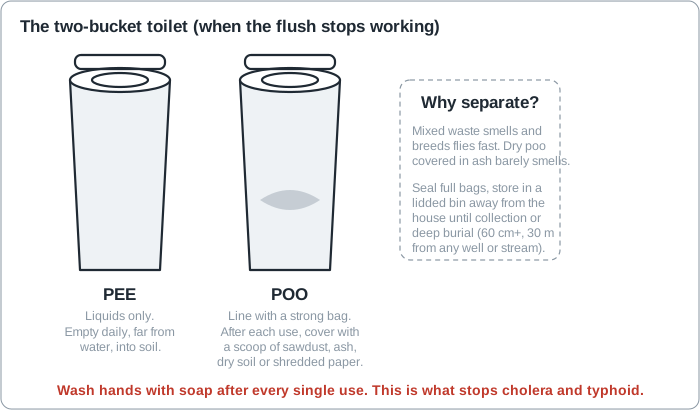
Two buckets with lids. Pee in one. Poop in the other, which is lined with a heavy trash bag. After every use, cover the poop completely with a scoop of sawdust, shredded paper or dry leaves and put the lid on. Fill it halfway, then tie the bag, put it inside a second bag and store it outside in a lidded can until the city tells you what to do with it.
The water goes off, or the street floods, or the ground shakes and nobody knows whether the sewer pipe under the house is still in one piece. The toilet looks normal. People keep using it. By the second evening the bathroom is the worst room in the house, and by the fourth somebody has diarrhea.
That second part is the reason this page exists. In a long emergency, what makes a family seriously ill is not usually hunger or cold. It is what comes out of people getting into what goes into people. The flush toilet hid that problem from us. When it stops working, you need a plan for the toilet the same day.
First: can you still flush?
Two different situations look the same from the bathroom.
- The water is off but the sewer works. A power outage that stops the pumps, a water main break up the street. The drain pipes still carry waste away by gravity. You can flush by pouring a bucket of gray water, the water from washing dishes or bathing, fast into the bowl. Pee can go down without flushing every time.
- The sewer itself may be broken. An earthquake, a flood, a sewage backup or an official notice. Don't flush and don't pour water down any drain. If the pipe is cracked, what you flush comes back up through your shower drain, your basement floor or your neighbor's. Oregon's emergency sanitation guidance says plainly: don't flush until officials tell you it's safe.
If you don't know which one you're in, treat it as the second until someone tells you otherwise. A bucket toilet for two days costs you nothing. A sewage backup costs you the house.
The two-bucket toilet
This is the method county health departments in Oregon and Washington teach after earthquakes, adopted from Christchurch, New Zealand. It works far better than it sounds, for one reason: mixed waste stinks and breeds flies; separated waste, with the solids kept dry and covered, barely smells at all.
What you need
- Two 5-gallon buckets with lids, marked PEE and POO in big letters
- Heavy trash bags for the poo bucket (Oregon State suggests 13-gallon, 3 to 5 mil)
- Cover material: a bag of sawdust, wood shavings, wood pellets, shredded paper or coir, and a scoop
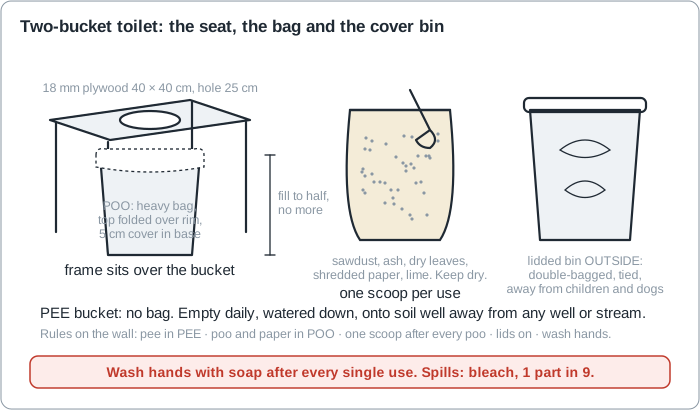
- A seat: a snap-on bucket seat, the seat off your own toilet, or a pool noodle split down its length
- Toilet paper, disposable gloves, hand sanitizer with at least 60% alcohol, and soap
- A lidded outdoor trash can just for the full bags
All of it fits inside the two buckets, so the whole kit lives in a closet and takes up the space of two buckets. That is the cheapest thing on this page to do tonight.
The pee bucket
No liner. Urine from a healthy person carries few germs and is the easy half of the problem. When it is about a quarter full, or as heavy as you can carry safely, add some water if you have it and pour it onto soil: a corner of the yard, under a tree, well away from any well, stream or vegetable bed. Change the spot each time. Rinse and put it back.
If the sewer works and only the water is off, you can pour the pee down the toilet with a splash of gray water instead.
The poop bucket
Line it with a heavy bag. Put a layer of cover in the bottom. After each use, add about half a cup of cover, enough to hide everything, and close the lid. Toilet paper goes in this bucket, not the pee one. Fill it no more than half full: a full bag is too heavy to lift and too easy to split. Then tie it off, put it inside a second bag, tie that, and carry it out.
Anyone with diarrhea gets extra cover, and their bag gets tied off the same day. Their waste is the dangerous kind.
Cover material, best first
- Sawdust or wood shavings, by a long way
- Wood pellets (they take little storage space and soften with moisture)
- Shredded paper, torn cardboard, dry leaves, coir, peat moss
- Cat litter, or wood ash from a fireplace
Keep a bin of it next to the bucket with the scoop in it. When a bucket toilet smells, there is nearly always too little cover on it.
Where the full bags go
Double-bagged and tied, into a lidded trash can outside, in the shade, where children, dogs and raccoons can't get at it, and away from the kitchen and any water. Don't put it in the regular trash and don't throw it in a dumpster. Hold it until your city or county says how they want it collected. After a big disaster they will.
If you are rural and the wait runs to weeks, the bags can be buried in a pit at least 2 feet (60 cm) deep, 100 feet (30 m) or more from any well, stream or water source, above any flood line, with the soil stamped back on top. On a septic system, check your county's guidance before putting anything with sawdust in the tank; carbon material can damage it.
The bucket isn't what spreads cholera, typhoid and stomach bugs. Hands are. Set up a hand-wash next to the toilet: a jug of clean water with a spigot, soap and a catch bucket. Wet, lather, scrub for 20 seconds, rinse, dry. Sanitizer with at least 60% alcohol if there is no water. If several people in the house get watery diarrhea at once, make up the home rehydration drink and get word to a clinic.
In an apartment
The buckets work just as well in a bathroom with the window open or on a balcony. The bags go in a lidded bin on the balcony, not in the stairwell and not by the elevator. That is how a building falls out with itself.
Cover material is the hard part with no yard. Buy a bag of wood pellets or a bale of pine shavings now and keep it under the sink. Shredded paper from the recycling works in a pinch. And talk to the neighbors on your floor: a building with one agreed toilet plan and one agreed place for the bags is a healthy building.
What I'd store, and what it costs
For a family of four for two weeks: two buckets with lids, a snap-on seat, a box of heavy bags, two bags of sawdust or one of pellets, a box of gloves, soap and sanitizer. Most of it is on the shelf at any hardware store. It's the one part of a disaster kit that almost nobody has, and the one you'll want on the first evening.
Don't forget the water side of it. Hand-washing and dishwashing come out of your stored water, which is why the water-per-person numbers include more than just drinking. If the tap is running but the city has issued a notice, read what a boil-water notice means before you brush your teeth.
Toilet when the flush stops
- Sewer may be broken? Don't flush, don't pour water down drains.
- Two buckets with lids. PEE: no liner, dilute, pour on soil, change the spot.
- POO: heavy bag, cover after every use, half full then double-bag and tie.
- Sawdust is best. Pellets, shredded paper, leaves, litter or ash will do.
- Bags in a lidded can outside, away from kids, food and water. Wait for disposal instructions.
- Wash hands 20 seconds, every time. Diarrhea in several people = rehydration drink and a clinic.
Questions people ask
Can I still flush the toilet with a bucket of water when the water is off?
If your sewer and pipes are working, yes: pour a full bucket of gray water fast into the bowl and it will flush. But after an earthquake, a flood or a sewer failure, don't. A broken pipe means the waste comes back up somewhere else in your house or your neighbor's. Wait until the water company or county says the sewer is working.
What can I use instead of sawdust in a bucket toilet?
Anything dry and crumbly that soaks up moisture: wood shavings, wood pellets, shredded paper, torn cardboard, dry leaves, coir, peat moss, cat litter or wood ash. Sawdust and shavings work best. Not enough cover is the only reason a bucket toilet smells.
Where do I put the bags of waste?
Double-bag and tie them, then keep them in a lidded trash can outside, in the shade, away from children, pets, food and any water source. Don't put them in the normal trash. Hold them until your city or county tells you how to dispose of them.
Is urine safe to pour on the ground?
Urine from a healthy person carries few germs. Dilute it with water if you can and pour it on soil, well away from wells, streams and vegetable beds, changing the spot each time. Oregon State University Extension suggests emptying the pee bucket when it is about a quarter full.
How much cover material do I need?
Oregon State University Extension says about half a cup per use, enough to cover the waste completely. Count the uses in your house for a day and you have the number. Wood pellets take the least storage space for the amount of cover they give.
This page is information, not medical advice. The two-bucket method and the setup numbers follow Oregon State University Extension and the PHLUSH Twin Bucket guidance; the hand-washing rule is the CDC's.
Sources
- Oregon State University Extension, Survival Basics: Sanitation and Waste Management (EM 9334): extension.oregonstate.edu/catalog/pub/em9334-s
- PHLUSH, Household sanitation preparedness and the Twin Bucket toilet: www.phlush.org/household-sanitation-preparedness
- CDC, About handwashing: www.cdc.gov/clean-hands/about/index.html
