| If you have… | Do this |
|---|---|
| Fuel | Rolling boil for 1 minute (3 minutes high in the mountains). Cool with the lid on. |
| Plain bleach | 2 drops per litre, stir, wait 30 minutes. Double for cloudy water. A faint chlorine smell means it worked. |
| Sun and clear bottles | Clear water, bottle on its side in full sun for 6 hours (2 days if cloudy). |
| Muddy water | Settle, pour off, cloth-filter, then one of the above. |
| Water that smells of fuel or chemicals | Don't drink it. Nothing above will fix it. |
You can live for weeks without food. You cannot live for more than a few days without water, and dirty water will put you in bed with diarrhoea faster than almost anything else. In every big disaster, more people are made ill by bad water than by the disaster itself.
The good news is that the fix is cheap. Here are the three methods from the book, with the numbers you need.
First, make it clear
All three methods work much better on clear water. If the water is muddy or has bits in it, let it stand in a bucket until the mud settles, then pour the top off carefully.
Then pour it through a clean cotton cloth folded four to eight times. An old sari works, or a bedsheet, or a T-shirt. Researchers in Bangladesh showed that this simple cloth filter cut cholera cases nearly in half across whole villages. It is not enough on its own. It is a very good start.
A bucket filter of cloth, sand and crushed charcoal will take it further and remove most of the smell. But be clear about what a filter like that is for. It makes water clear, not safe. Germs are far too small for sand to stop. The last step is always one of the three below.
Method 1: boil it
Boiling is the surest method. It kills everything living in the water.
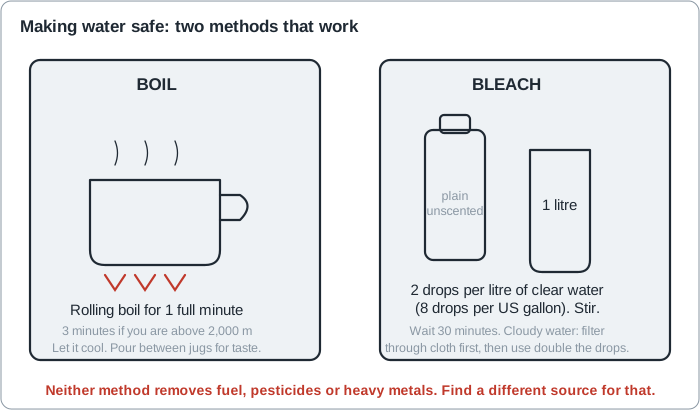
Bring the water to a rolling boil. That means big bubbles breaking the surface, not just steam and a few small bubbles on the bottom. Keep it there for one full minute. If you live above about 2,000 metres, make it three minutes, because water boils at a lower temperature up there.
Let it cool with a lid on. Boiled water tastes flat. Pour it back and forth between two clean jugs a few times, or add a tiny pinch of salt to each litre, and it tastes normal again.
The only drawback is fuel. Boiling ten litres a day for a family burns a lot of wood or gas. If fuel is short, a tin-can rocket stove boils a litre on a handful of twigs. Or use one of the next two methods.
Method 2: a few drops of plain bleach
Ordinary household bleach is what water companies use to make tap water safe, just in a very weak dose. It has to be the plain, unscented kind, with nothing added for colour or cleaning.
The dose is easy to remember: two drops per litre. Stir, and wait thirty minutes before drinking. For a twenty-litre bucket that is forty drops, which is about half a teaspoon. If the water is cloudy or very cold, use double: four drops per litre.
After thirty minutes the water should smell very faintly of chlorine, like a swimming pool from a long way off. If it smells of nothing, add the same dose again and wait another fifteen minutes. If it still has no smell, the bleach is too old. Find another bottle.
- Use bleach less than a year old. It loses strength on the shelf.
- Never use scented bleach, "splash-less" bleach, or anything that says it has added cleaners.
- Keep the bottle away from children. Never mix it with anything else, especially anything acidic.
One bottle of bleach will treat thousands of litres. It is one of the cheapest useful things you can keep in the house.
Method 3: let the sun do it (SODIS)
If you have no fuel and no bleach, you still have the sun. The method is called SODIS, and Swiss researchers have tested it for more than twenty years in dozens of countries.
- Take a clear plastic drinks bottle, the thin PET kind, of two litres or less. Pull the label off. It should be clear, not cloudy or badly scratched.
- Fill it with clear water. If you cannot read a newspaper headline through the full bottle, the water is too cloudy. Cloth-filter it first.
- Lay the bottle on its side in full sun, where nothing will shade it. A tin roof is perfect. A dark cloth or a sheet of tin underneath helps.
- Leave it for six hours of strong sun. If the sky is half cloudy or more, leave it for two full days.
- Drink straight from the bottle, or pour into a clean cup. Don't tip it into a dirty container and undo the work.
It does not work in rain. It does not work with glass, or with the thick hard plastic of water-cooler jugs. But with a dozen bottles on the roof, a family in a sunny country can make all its drinking water this way, and it costs nothing.

Boiling, bleach and sunlight kill germs. That is all. They do not take out petrol, diesel, pesticides, factory chemicals, or the metals that can leak from old pipes and some roofs. If water smells of fuel, has a rainbow film on top, or comes from near a factory, a mine or a flooded petrol station, don't drink it however much you boil it. Find another source.
Where the water comes from when the tap is dry
Your own house. A hot-water tank, if you have one, holds fifty litres or more of clean water. The toilet cistern (the tank, not the bowl) is clean too. So is ice in the freezer, and the liquid in tins of fruit and vegetables.
Rain. A roof and a gutter can collect hundreds of litres from one shower. Let the first five or ten minutes wash the dust and bird droppings off the roof before you start collecting. Then treat it before drinking, because roofs are not clean. Cover the barrel against mosquitoes; in the tropics an open barrel becomes a dengue nursery within a week.
Wells, streams and tanks. Take water from upstream of any village, toilet or animal area. Clear it, then treat it. Always.
How much to store, and how
The planning number is four litres per person per day: two for drinking, two for everything else. In a hot climate, or if someone is sick, pregnant or breastfeeding, plan for more. Two weeks for a family of four is about two hundred litres, which is four big drums.
Use clean containers that have held food or drink before. Never chemical or fuel containers. Rinse each one with a teaspoon of bleach in a litre of water, tip it out, then fill. Keep it lidded and in the shade. Water you store yourself keeps for about six months. After that, empty it on the garden and fill again.
This page is information, not medical advice. If someone in the house has diarrhoea, see the home rehydration drink and the signs that mean a clinic now. The numbers come from the CDC, the US EPA, the Swiss SODIS researchers at Eawag and the Bangladesh cloth-filter study; the full sources are listed at the back of the book.
