One litre of clean water. Six level teaspoons of sugar. Half a level teaspoon of salt. Stir until it dissolves. It should taste no saltier than tears. Sip often. Make it fresh every day.
In a child, a bad bout of diarrhoea can cause dangerous dehydration in a day. The drink puts back the water and salt the body is losing, and it does it with things every kitchen has.
The recipe above is the World Health Organization's home version. It has saved more lives than almost any other medicine in history, and it costs almost nothing. This is not a folk remedy. It is official WHO guidance, and it sits in the book's first-aid chapters, not in the herbal one.
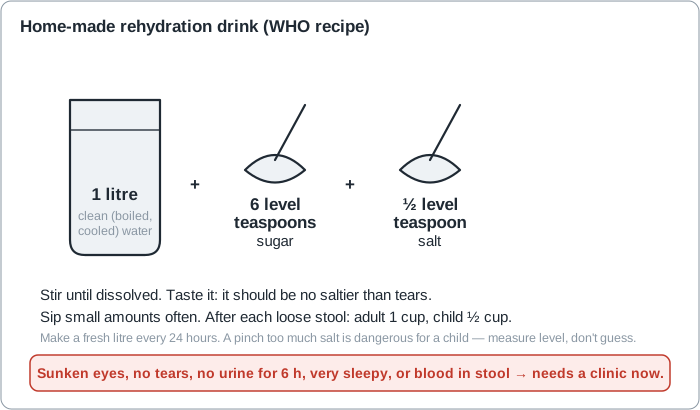
How to make it
- Start with clean waterOne litre of clean water: boiled and cooled, or treated with bleach or sunlight.
- Measure, levelAdd six level teaspoons of sugar and half a level teaspoon of salt. Scrape each spoon flat with a knife. Don't guess.
- Stir and tasteStir until it dissolves. Taste it: it should be no saltier than tears. If it tastes salty, throw it out and start again.
- Give small sips, oftenAfter every loose stool, about a cup for an adult, half a cup for a small child, a few spoonfuls at a time for a baby alongside breast milk. If they vomit, wait ten minutes and start again, slower.
- Make it fresh every dayMake a new litre every 24 hours. Don't keep yesterday's.
Level teaspoons, not heaped. If it tastes salty, you have put too much in. Throw it out and start again. And the water has to be clean; if you are not sure, see how to make water safe without electricity.
Sachets, rice water and zinc
Pharmacy sachets are better. If you have ORS sachets, use those instead. They contain extra salts and work slightly better. Keep a box in the medical kit; they weigh nothing.
Rice water works too. The cloudy water left after cooking rice, with a pinch of salt, is an old Asian remedy for diarrhoea, and it turns out to be a good one. It has been tested in hospitals and works as well as the sugar-salt drink for cholera. Use it fresh, the same day.
Zinc for children. Zinc tablets, 20 mg a day for ten to fourteen days (10 mg for babies under six months), shorten diarrhoea and help stop it coming back. Keep a strip in the medical box.
Keep feeding
Keep breastfeeding. Give plain food, such as rice, bananas or dhal, as soon as the person will eat. Avoid fizzy drinks and fruit juice; the sugar makes diarrhoea worse. Don't give anti-diarrhoea pills to children under twelve.
For vomiting: nothing for half an hour after a vomit, then a spoonful every few minutes. Most stomach bugs pass in a day or two.
When it is more than you can handle at home
Any of these means the person needs a clinic or hospital, even if it is far:
- Sunken eyes, no tears when crying, dry mouth
- No urine for six hours or more (fewer wet nappies in a baby)
- Very sleepy, floppy, hard to wake, or cannot drink
- Skin that stays pinched up for two seconds or more when you pinch the back of the hand
- Blood in the stool
- Diarrhoea for more than a week, or vomiting for more than two days
- Any baby under six months who is not keeping fluids down
- Green vomit, vomit with blood or what looks like coffee grounds, or severe belly pain
In the heat, too
The same drink helps in a heat wave. If you are working or sweating a lot, add ORS, or a pinch of salt and sugar, to the water you drink. A cup of water every hour you are awake is the book's rule for hot days, more if you are working.
Heat exhaustion looks like tiredness, dizziness, headache, feeling sick, heavy sweating, pale clammy skin and cramps. Get the person into the shade, take off the outer clothes, give water or ORS to sip, and sponge and fan them. They should be better within thirty minutes. If they are not, or they become confused, that is heat stroke: cool them hard and fast with a wet sheet and get them to a clinic.
If there is a high fever as well
In tropical countries, a high fever with severe aches, especially with a rash or bleeding gums, could be dengue. The person must not take ibuprofen or aspirin, only paracetamol, and must be seen. The danger in dengue comes after the fever drops, on about day three to seven. Severe stomach pain, vomiting that will not stop, or bleeding from the gums or nose means hospital that day.
Rehydration
- 1 litre clean water + 6 level tsp sugar + ½ level tsp salt. Sip often. Fresh daily.
- Zinc for children: 20 mg a day, 10–14 days.
- Keep feeding. No juice, no fizzy drinks.
- Clinic now: sunken eyes · no urine 6 h · too sleepy to drink · blood in stool · baby under 6 months not keeping fluids down.
Not medical advice. This is home care for when help is far away or slow, taken from the book. It does not replace a doctor, nurse or pharmacist. Sources: WHO guidance on diarrhoea and oral rehydration, the NHS, a Cochrane review of rice-based rehydration, and the WHO dengue fact sheet.
